While building the OWASP Top 10 for LLM security practice environment, I seriously considered purchasing an NVIDIA workstation in the 7 to 10 million KRW range. The conclusion was surprisingly simple. If monthly GPU usage is not high and technology changes rapidly, it is more reasonable to develop code locally and perform actual GPU validation only on AWS.
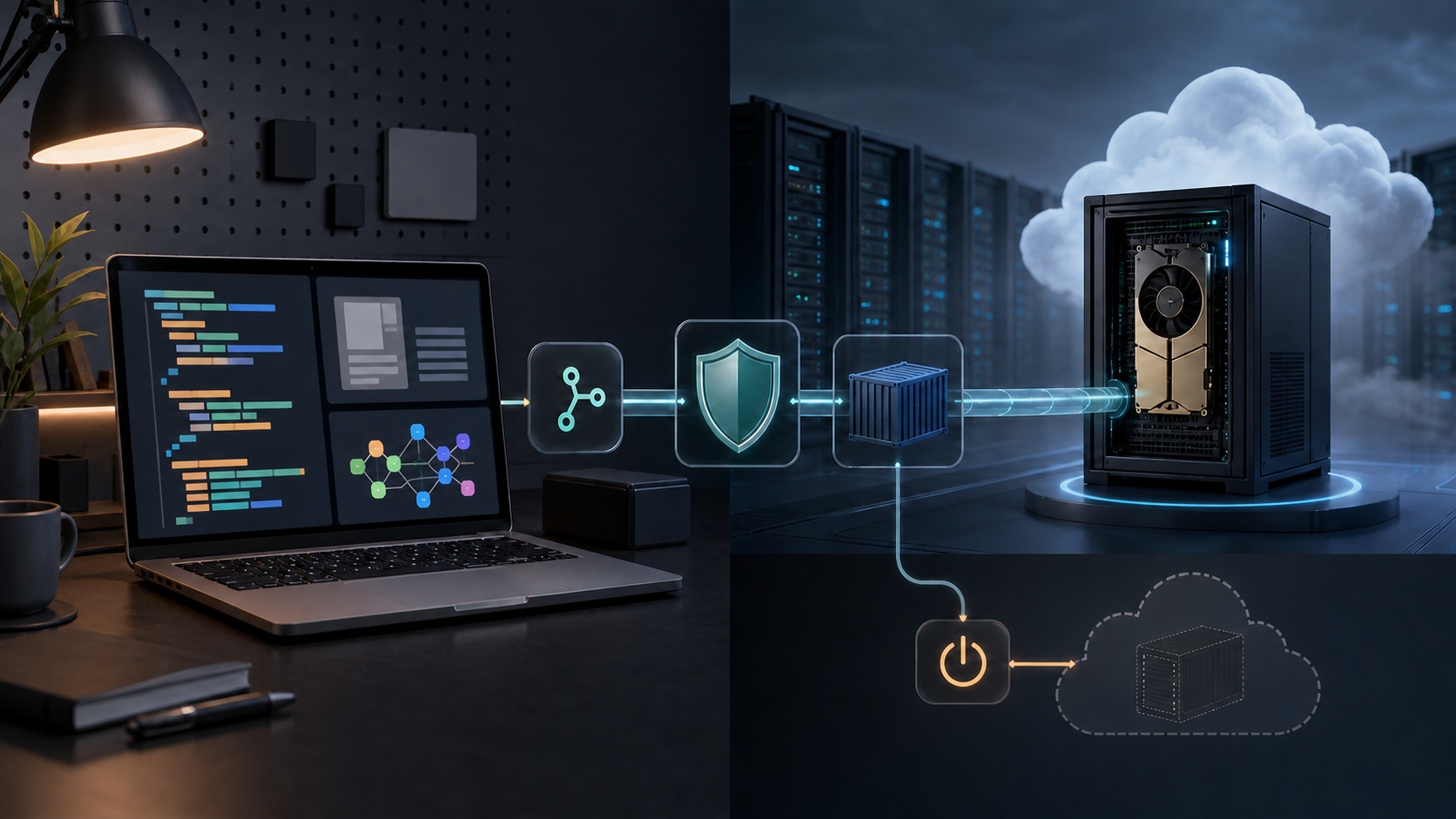
Current LLM Security Practice Environment
The practice environment is deployed using Terraform, Auto Scaling Group (ASG), and Podman Compose. AWS us-east-1’s g6.xlarge provides NVIDIA L4 24GB, 4 vCPU, and 16GiB memory. The ASG’s desired capacity is set to 1 only when a GPU is needed, and then lowered to 0 when finished.
Locally, I perform Markdown writing, code modification, Git operations, and static testing. On AWS, I run Ollama models and validate Guardrail, LLMGoat, Presidio, and NeMo, along with Log, Trace, Metric collection, and Grafana dashboards. Most actual development time does not require a GPU. Furthermore, actual AWS deployment practices, including Terraform and ASG, cannot be fully replaced by a single local GPU.
What is the hourly cost of AWS?
This article assumes g6.xlarge Linux On-Demand at $0.8048 per hour and an exchange rate of 1,400 KRW per dollar. Conservatively reflecting VAT and public IPv4 costs, the running cost is estimated at approximately 1,250 KRW per hour. The gp3 100GB that persists even when the instance is off is calculated at 12,000 KRW per month, referencing EBS pricing.
AWS Monthly Cost = 1,250 KRW × Monthly GPU Runtime + 12,000 KRW
Prices, exchange rates, taxes, regions, and network configurations vary over time. Before actual deployment, you should reconfirm with AWS On-Demand pricing and Cost Explorer.
Hidden Costs of a Local Server
A local setup is assumed to cost 7 million KRW or 10 million KRW, with an average power consumption of 650W and electricity cost of 200 KRW per kWh. The electricity bill is approximately 130 KRW per hour. However, the cost doesn’t end with the purchase price. Depreciation, breakdowns and repairs, noise, heat generation, cooling, installation space, and driver and CUDA maintenance all follow.
The RTX 4090 has 24GB, the same VRAM capacity as the L4, but consumer GPUs and data center GPUs differ in stability, power, drivers, and operational characteristics. It’s not possible to definitively say which one is always faster. The RTX 5090 offers 32GB VRAM and 575W TGP, but the total system price, including power and cooling, also increases.
Break-even Point by Monthly Usage Hours
| Monthly GPU Hours | AWS Monthly Cost | Local Electricity Cost | 7 Million KRW Equipment | 10 Million KRW Equipment |
| — | — | — | — | — |
| 50 hours | 75,000 KRW | 7,000 KRW | Approx. 8.6 years | Approx. 12.3 years |
| 100 hours | 137,000 KRW | 13,000 KRW | Approx. 4.7 years | Approx. 6.7 years |
| 176 hours | 232,000 KRW | 23,000 KRW | Approx. 2.8 years | Approx. 4.0 years |
| 200 hours | 262,000 KRW | 26,000 KRW | Approx. 2.5 years | Approx. 3.5 years |
| 300 hours | 387,000 KRW | 39,000 KRW | Approx. 1.7 years | Approx. 2.4 years |
| 400 hours | 512,000 KRW | 52,000 KRW | Approx. 1.3 years | Approx. 1.8 years |
300 hours per month is approximately 13.6 hours per day based on 22 weekdays. It’s not easy for an individual developer to actually run a GPU for that many hours every day. Even if all 8 hours of a weekday are used for GPU tasks, it’s 176 hours per month. In this case, AWS costs approximately 230,000 KRW per month, 2.76 million KRW annually, and 8.28 million KRW over 3 years.
Reasons Why the 3-Year Break-even Calculation is Hard to Trust
In three years, GPU generations, required VRAM, model sizes, quantization techniques, and CUDA environments can change significantly. There’s no guarantee that a 24GB device purchased today will sufficiently handle desired models and practices three years from now. Cloud fees include not only simple rental costs but also the cost of transferring hardware obsolescence and replacement risks to the cloud provider.
Of course, if you need to use it stably for hundreds of hours a month, or if data export is difficult or experiments must be conducted without internet, a local setup might be advantageous. Conversely, if AWS usage is neglected, costs can quickly escalate, and you might be affected by GPU capacity shortages or network failures.
My Chosen Hybrid Operating Model
Locally, I complete documentation, Git, code, and static tests. Only integrated tests requiring a GPU are run by scaling the ASG to 1, and once Ollama, NeMo, Presidio, and the observability stack validation are complete, it’s immediately scaled down to 0. Adding the following three points makes cost control easier:
- Scheduled tasks to automatically scale ASG to 0 after tests complete, and maximum runtime limits.
- AWS Budgets alerts and monthly cost limits.
- Recording start/end times to measure GPU usage and costs per test.
Given the current usage pattern, this approach is more flexible than pre-purchasing a server under 10 million KRW. However, the most accurate judgment comes from plugging your own prices and times into the following formula:
AWS 월 비용 = 시간당 AWS 비용 × 월 GPU 실행시간 + 고정 스토리지 비용

로컬 손익분기 개월 =
장비 구매가격 ÷
((AWS 시간당 비용 - 로컬 시간당 전기료) × 월 사용시간 + AWS 고정비)
This calculation does not fully reflect equipment residual value, repair costs, cooling costs, financial costs, cloud data transfer fees, and productivity differences between the two environments. The numbers should be seen not as a conclusion, but as a starting point for verifying your actual GPU runtime.
Leave a Reply