Hello everyone! This blog is for product managers (PMs), planners, and anyone dreaming of a new service. Today, I’d like to talk about PRD (Product Requirements Document), which is often a PM’s most important weapon and sometimes their biggest challenge. Furthermore, I’ll share the key secret to drastically shortening this often tedious and complex PRD writing process using AI! 🚀
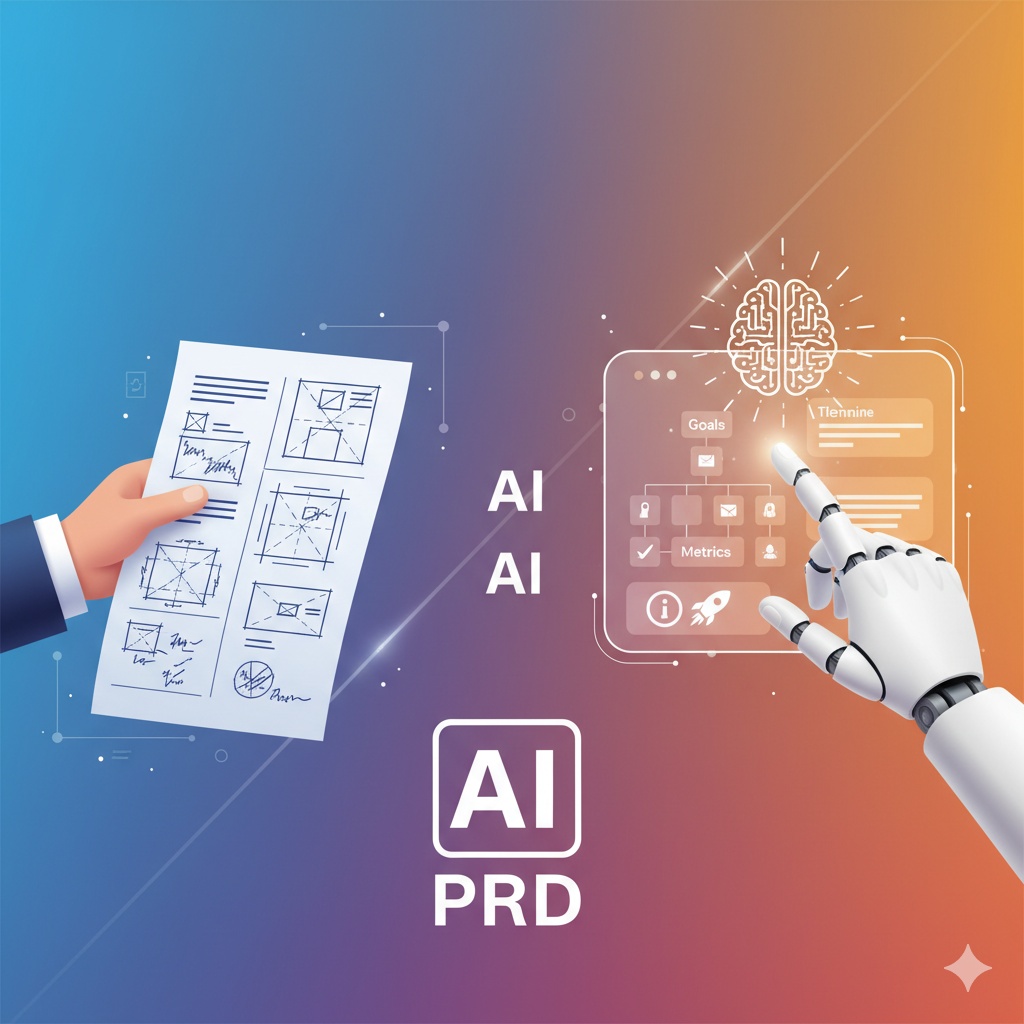
🤔 What exactly is a PRD? Why is it important?
PRD stands for ‘Product Requirements Document.’ Simply put, it’s a detailed outline of ‘what’ product or service we intend to build, ‘why’ it needs to be built, and ‘what features’ it should have. It’s essentially the ‘blueprint’ or ‘map’ of a project. 🗺️
Why is this map so important?
- Ensures everyone shares the same vision 🤝: Developers, designers, marketers, and all team members understand the product by referring to the PRD. Without a PRD, everyone might draw different pictures, and the project could go off course.
- Reduces unnecessary debates 🤫: Whenever questions like “Why was this feature needed?” arise, the PRD provides clear criteria and justification.
- Keeps the project on track 🧭: It acts like a North Star, allowing you to reorient and confirm direction whenever you get lost during the development process.
However, as you well know, creating a thorough PRD requires a significant amount of time and effort. That’s where our savior, AI, comes in!
🤖 When entrusting PRD creation to AI, just tell it these things!
If you simply tell an AI (like ChatGPT, Gemini, etc.), “Write a PRD for our company’s app,” you won’t get a quality output. This is because AI generates results based on the information we provide. Always remember the phrase: “Garbage in, garbage out!”
To make AI draft a PRD like a smart PM, you need to clearly convey the following 7 key points:
1. Core Product/Service Identity 🆔
- What are you building? Define it clearly in one sentence.
- Example: “An AI-powered B2B SaaS service that summarizes meeting content in real-time and automatically extracts key action items.”
2. Problem to Solve 🎯
- Why is this product needed? Describe the specific pain points customers are experiencing.
- Example: “Office workers attend too many meetings but often miss important discussions or waste unnecessary time on meeting minute creation.”
3. Core Target Customer (Target Persona) 👨💻👩💼
- Who is this product for? Instead of a vague ‘office worker,’ define a specific persona.
- Example: “A project manager (PM) in their mid-30s at an IT company, managing multiple projects simultaneously. They need to efficiently manage concurrent meeting content and quickly share it with team members.”
4. Core Feature List ✅
- So, what can it do? Clearly list the core features the product should have. You don’t need to list all features; focusing on the 3-5 most important ones is best.
- Example:
- Real-time speech-to-text conversion and automatic meeting minute generation
- AI-powered summary of key topics and decisions
- Automatic extraction of ‘Action Items’ based on meeting content and assignment of responsible parties
5. Criteria for Success (Success Metrics) 📈
- How will you know if this product is successful? Provide specific success metrics (KPIs). This helps AI set feature priorities and objectives in a way that aims to achieve these metrics.
- Example: “Achieve a 5% paid conversion rate within 3 months of launch,” “Average of 3+ meeting minutes generated per user per week.”
6. Competitors & Differentiators ✨
- Who are the competitors, and what makes us different? Mention key competitors in the market and highlight the unique strengths (differentiators) of our product.
- Example: “Competitor A only provides simple transcription, but our key differentiator is that AI automatically organizes ‘next steps’ as well.”
7. Constraints ⏳
- What must we adhere to? Specify project constraints such as development language, platform (web, app), budget, and launch schedule. This helps AI define requirements within a realistic scope.
- Example: “Targeting MVP launch within 3 months as a web-based service. Development stack uses Python and React.”
📝 Practical Example! AI Prompt
You can ask AI using the 7 key points above, as shown below. Copy this template and fill it with your project details!
From now on, you are a capable Senior Product Manager (PM) at an IT startup. Based on the content below, draft a detailed PRD (Product Requirements Document) for a new service. The PRD should include a service overview, goals, target customer persona, core feature specifications, success metrics, and be written in a professional format.
1. Product Identity: AI-powered meeting summary and automatic action item extraction B2B SaaS service
2. Problem to Solve: Reduce the time office workers waste on meeting minute creation and help them not miss key meeting content.
3. Target Customer: Project managers in their 30s at IT companies. They manage meetings for multiple projects, and quick sharing and execution are crucial.
4. Core Features:
- Real-time speech-to-text conversion and speaker diarization
- AI-powered 3-sentence summary and key keyword extraction
- Automatic ‘Action Item’ generation based on discussion and assignee tagging feature
5. Success Metrics: Achieve a 5% paid conversion rate within 3 months of launch, average of 3+ uses per user per week
6. Competitors & Differentiators: Competitors only offer simple text conversion. Our differentiator is automatically generating ‘actionable outcomes.’
7. Constraints: Target MVP launch within 3 months, web-based service for initial development.
Based on this prompt, AI will create an astonishingly systematic and detailed PRD draft. Of course, you can’t use the AI-generated draft as is, but it will drastically reduce the time spent on creating the framework, allowing us to focus on more important aspects like ‘customers’ and ‘strategy.’
Now, start your daunting PRD creation smartly with AI!
Tags: PRD, Product Requirements Document, AI, ChatGPT, Gemini, Planning, PM, Product Manager, Planner, AI Utilization, PRD Writing Guide
Leave a Reply