Hello, explorers of the cloud-native world! 🖐️ Have you ever seen the CNCF Landscape map? Your first impression of it was probably similar to most people’s.
“Wow… is this for real? Do I have to know all of this?” 😱
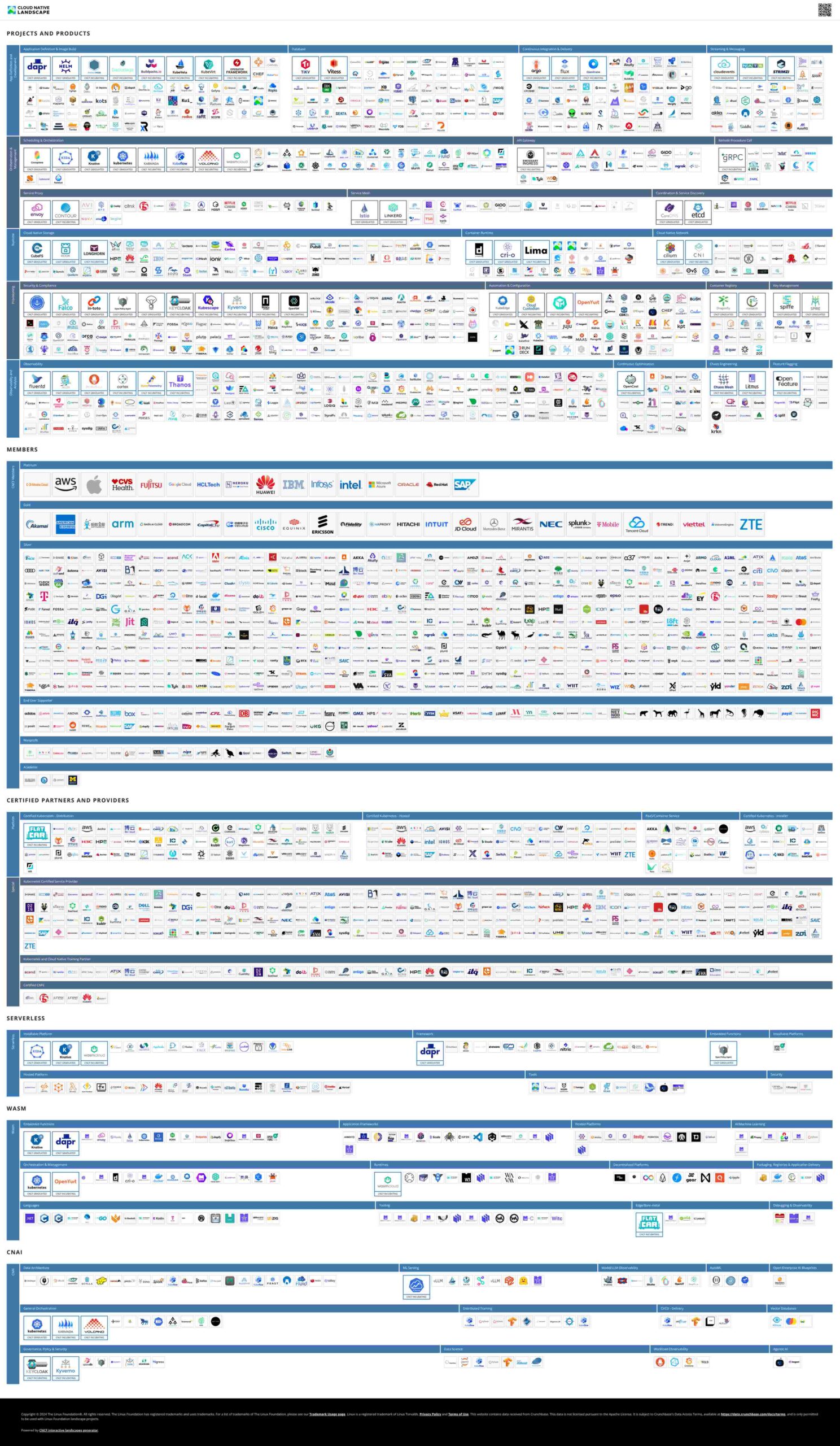
https://landscape.cncf.io/
Looking at that map, packed with thousands of tiny icons, is breathtaking. It’s like a hellish difficulty version of ‘Where’s Waldo?’ Today, we’re going to thoroughly explore the 5 inevitable reasons why CNCF (Cloud Native Computing Foundation) projects are so disorganized and chaotic, hidden within this complexity. 🔍
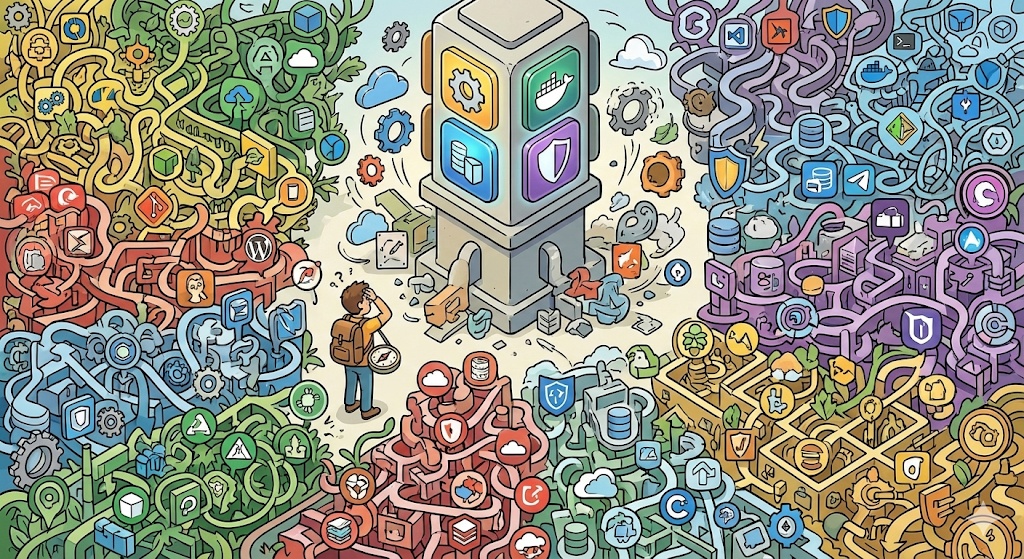
1. “No right answers, only choices” (Vendor Neutrality) 🏛️
The Apple and Microsoft ecosystems are clean. That’s because they dictate, “Use this.” However, CNCF’s philosophy is the exact opposite.
- Preventing vendor lock-in: CNCF’s biggest reason for existence is to prevent ‘vendor lock-in.’ It stops specific companies (e.g., AWS, Google) from monopolizing technology.
- Respecting diversity: Instead of saying, “There’s only one way to run a container!”, it says, “There’s method A and method B. Choose what fits your situation.”
- Result: This is why multiple tools with the same functionality coexist. (e.g., Why Istio, Linkerd, and Cilium all exist together in Service Mesh)
2. The ‘problem’ of cloud-native itself is too vast 🐘
Cloud-native goes beyond simply “spinning up a server.” It requires solving everything done in traditional on-premise environments with software.
As the problem was broken down, categories exploded:
- 🗄️ Need a database -> Database category
- 👀 Need to check server status? -> Observability (monitoring, logging)
- 🛡️ Need to stop hackers? -> Security
- 📡 Need to connect communications? -> Networking
- 💾 Need to store data? -> Storage
With dozens of projects needed for each area, the overall map is inevitably huge.
3. Infinite Competition System: Jungle of Survival of the Fittest 🦁
The CNCF Landscape is not a peaceful garden, but a fierce ‘Colosseum.’
- Duplication is welcome: CNCF does not prevent similar projects from entering. Instead, it encourages competition. It believes that better technologies survive through competition.
- Evolving ecosystem: Docker was king initially, but now Kubernetes is king, right? If CNCF had decided early on, “Only use Docker!”, today’s advancements wouldn’t exist. The chaotic map is a fierce ‘scene of technological evolution.’ ⚔️
4. Tier System: From kindergarteners to university students, all gathered 🚦
The biggest reason the map is complex is that ‘verified projects’ and ‘experimental projects’ are drawn on the same canvas. CNCF divides project maturity (Maturity) into 3 stages.
- Sandbox 🏖️: “Ideas are just emerging. We’re experimenting.” (Hundreds, may disappear anytime)
- Incubating 🐣: “Some users have emerged, and it’s stabilizing.” (Growing)
- Graduated 🎓: “Like Kubernetes and Prometheus, these are global standards.” (Reliable to use)
By trying to capture all these stages in one picture, countless unverified ‘new shoots’ are also shown, making it appear even more complex.
5. Startups’ ‘Territory War’ Marketing Battle 🚩
This is a slightly more realistic (business-oriented) reason.
- Being on the map is a credential: When an IT startup creates a new tool, having its logo on the CNCF Landscape provides immense promotional effect. Because they can say, “We’re a CNCF member too!”
- Investors’ eyes: Venture capitalists (VCs) sometimes decide on investments by looking at this map. As a result, countless companies strive to get their logo into even a corner of that map. Consequently, the map becomes increasingly crowded. 📈
📝 Conclusion: View this map as a ‘map,’ not a ‘menu.’
The chaotic nature of the CNCF Landscape is evidence that the cloud world is dynamic and rapidly changing.
💡 Tip: Don’t look at that complex picture and think, “I have to learn it all.” That’s impossible.
- Start with Graduated projects. (There are only a few core ones.)
- Zoom in only on the category you need (e.g., CI/CD).
- For the rest, just think, “Oh, these exist too,” and move on.
If you think of this complexity not as ‘confusion’ but as the infinite ‘possibility’ and ‘freedom’ given to us, it might feel a little less dizzying! 😄
Leave a Reply